Three Weeks of Silence – Four Weeks of Turning Inward
This post was written in English.
Sometimes the most meaningful journeys begin for reasons you never expected.
I went to Thailand for a practical reason. My Indonesian visa was about to expire, and I needed to leave the country for a while. I decided to stay abroad a little longer and use the opportunity to do something for myself.
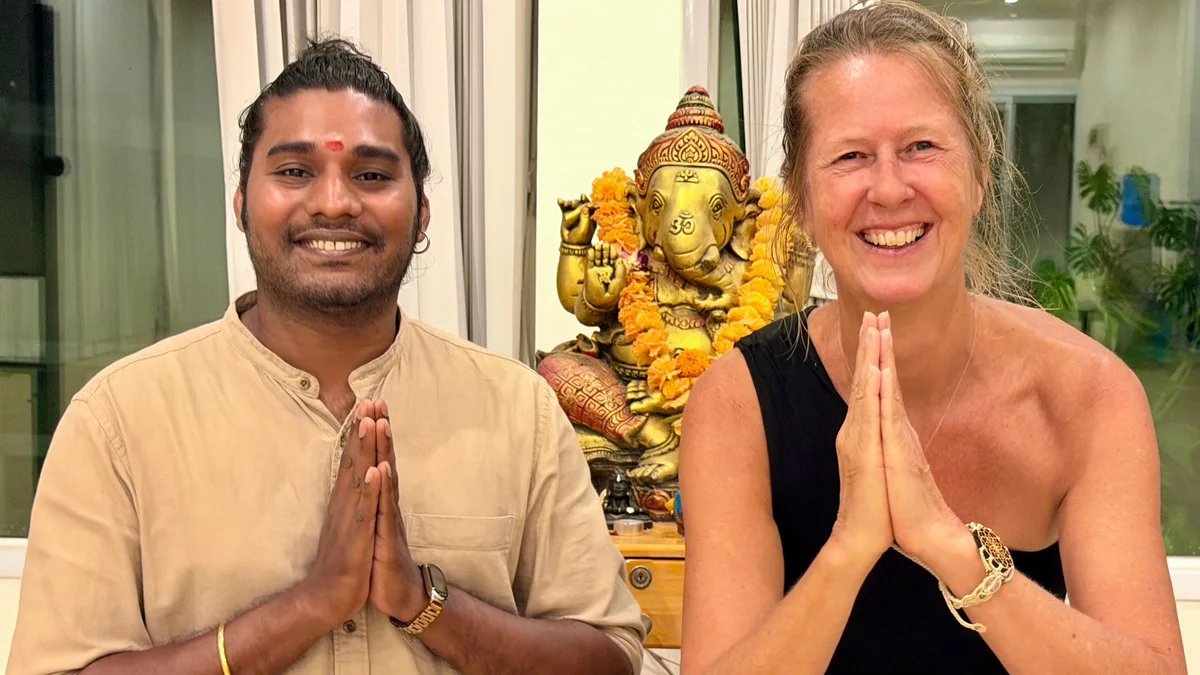
At One Yoga on Koh Phangan, I found a four-week retreat combining Vipassana meditation and yoga. It felt like a good opportunity to deepen my meditation practice.
What started as a visa run became four weeks of turning inward.
Creating my own retreat
The retreat offered a programme of yoga and meditation, but I wanted to spend more time meditating. So I created my own extended schedule alongside the regular programme.
My days started at 5 am and ended at 9 pm.
I decided to spend three of the four weeks in silence. What I particularly appreciated was that the location was designed to accommodate this. I could simply put up a little Silence sign, and my phone was safely stored in a locker.
I was one of the few participants who chose to do the retreat this way.
It made a real difference not having to explain myself, engage in conversations or constantly make decisions about whether to participate socially. Silence was simply an accepted part of the environment.
I also adopted the traditional Vipassana eating schedule. Lunch was vegetarian, and although dinner was available for participants, I chose not to eat after lunch. I had experienced this during previous Vipassana retreats and found that it supported my meditation practice.
Every morning I looked out over the sea. The location was beautiful, with wonderful places to meditate. Koh Phangan itself was also a lovely place to spend time, with small beaches, restaurants and opportunities to swim in the afternoon.
Everything seemed to be in place for a meaningful retreat.
When expectations get in the way
I had hoped to experience something similar to my previous ten-day Vipassana retreats. I was serious about my practice and committed to the extended meditation schedule.
But there was one thing I hadn’t anticipated: the noise.
There were people talking everywhere. The environment was not as quiet as I had expected, and at times I found it difficult to settle into deeper meditation.
Eventually, I reached a point where I thought: this isn’t going to happen here.
So I let go of the expectation.
And that was when something shifted.
I entered a very deep state of being. I experienced a profound sense of connection with the cosmos, almost as if I was receiving a download of information. I was incredibly aware of what was happening, but also filled with wonder. I didn’t try to understand it, interpret it or hold on to it. I simply allowed it to happen.
It was a remarkable experience.
Looking back, I find the paradox particularly interesting. I had created a very disciplined programme for myself, meditating for many hours each day, hoping to reach a certain depth. Yet the experience came when I stopped trying to make it happen.
Perhaps that is one of the things meditation teaches us: discipline creates the conditions for practice, but it doesn’t give us control over what emerges.
Silence does not disconnect you from life
During the first week, my father underwent heart surgery.
It was a worrying time, especially being so far away. During meditation, I saw a white light surrounding him. I felt compelled to call my mother, and learned that the operation had been touch and go.
That night, taking the time difference into account, I called my father in hospital.
I was afraid he might die.
The combination of that fear and the silence created another very deep spiritual experience.
It reminded me that meditation does not take you away from life. You may be sitting in silence, but you are not separated from the people you love, their suffering or your own vulnerability.
Sometimes, when the distractions disappear, you become even more aware of what matters.
Knowing when to return
After three weeks, I decided to end my period of silence and make the fourth week an integration week.
I could easily have continued for another week. It wasn’t that I had reached my limit or that silence had become too difficult. I simply felt that three weeks was enough.
I wanted to start talking again, reconnect with the people around me and integrate the experience rather than simply continue extending it.
For me, that was also part of the practice: recognising what I needed and making a conscious choice.
Discipline had helped me create the space for the experience. Knowing when to stop was another part of that process.
Taking silence with me
I went to Thailand because of a visa requirement. I left with four weeks of experiences that I hadn’t planned for.
Three weeks without speaking, an extended meditation practice, unexpected spiritual experiences and a very personal confrontation with fear and vulnerability.
I don’t think silence necessarily makes life easier, nor do I think the purpose of meditation is to reach a particular state of mind.
What I value is the opportunity to observe more deeply. To notice what happens when I stop filling every moment with activity, conversation or distraction.
And perhaps most importantly, to discover that the depth of an experience cannot always be planned, scheduled or achieved through effort.
Sometimes, it begins when you stop trying.