Ten Days of Silence in Mauritius: My Fourth Vipassana Retreat
This post was written in English.
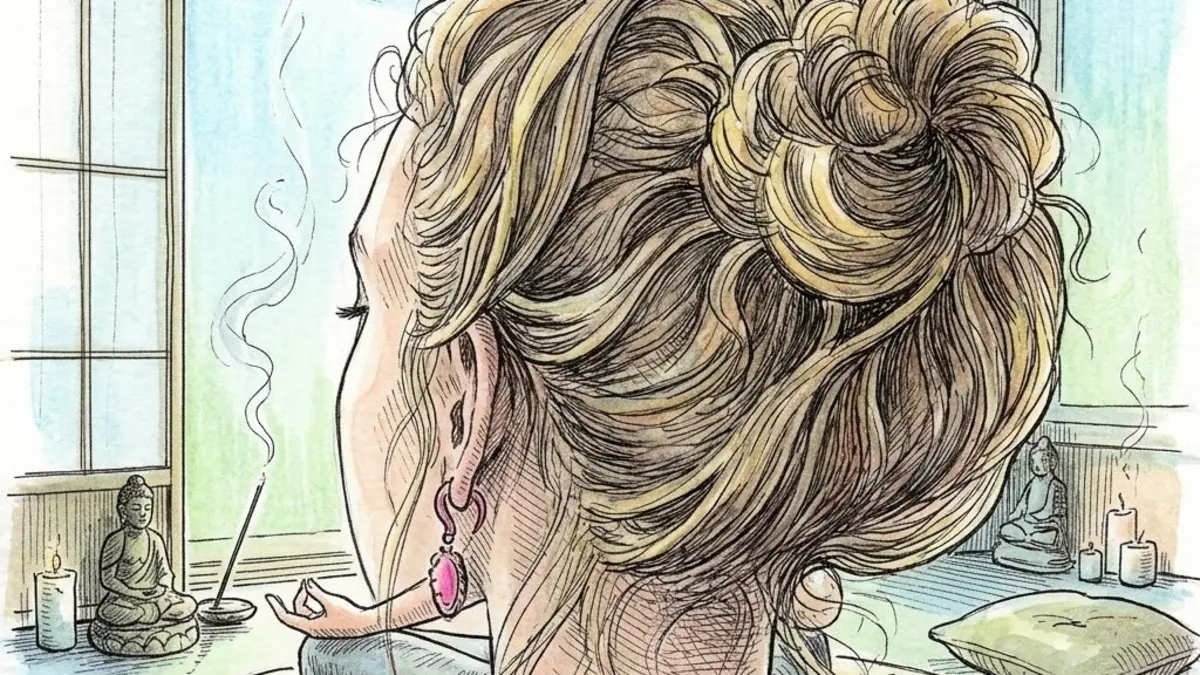
My fourth Vipassana retreat, on top of sailing three years at sea
I’m in Mauritius, waiting for a weather window to sail to South Africa. That window is taking its time, so I take the chance to do a Vipassana course: ten days of meditating in silence. It’s my fourth time.
The second morning
By now I know that something special can happen around the third day. This time it happens on the morning of the second day, to my surprise. My body disappears and all I feel is the breath going in and out. I check with the teacher. She says: you’re on the right path, keep following your breath.
That’s during the first period, Anapana. You focus on your breath, on the area below your nose and above your upper lip. That trains your mind, so that afterwards you can go deeper and let go of old sankharas: knots in your body that formed through your reactions to what happens in your life.
What Vipassana is
Vipassana is an ancient meditation technique from India. In the Pali language it means: to see things as they really are.
The aim is to purify the mind, your thoughts and feelings. You let go of negative habits, craving and aversion, to find lasting inner peace. That happens in three layers:
- You break the cycle of (automatic) reactions of craving and aversion.
- You eradicate deep-seated conditionings, the sankharas: mental knots or scars. They accumulate over a lifetime and act like a filter through which you view the world.
- You see reality as it truly is, and shift from blind reaction to conscious action.
An unpurified mind is like a turbulent, muddy pond: you can’t see the bottom. Your thoughts are distorted by your biases, fears and ego. Only when the mind is clean and still can you experience the true nature of reality, anicca, without illusion.
Purification is mental detoxification. By remaining equanimous during meditation, you stop creating new knots. The old ones can surface and naturally dissolve.
The body is the radar for the subconscious mind. The biggest problem with trying to purify the mind is that your subconscious is hidden from you. You can’t just tell yourself “stop being anxious”, because anxiety lives deeper inside. But the body is completely connected to the subconscious. Long before your conscious mind realizes you’re angry, your breath shortens and your chest tightens. The body acts as a mirror: by observing the body, you’re looking directly at the state of your mind.
You cannot change what you cannot feel. When you learn to remain calm during a physical sensation, a pain or an itch, you’re simultaneously training your subconscious mind to remain calm during emotional storms in daily life.
The difference between knowing and realizing. You can tell a child: don’t touch the stove, it’s hot and will burn you. After the experience, it will never touch that stove again.
Three steps
1. Sila: morality, right conduct. Before you can even look at the mind, you need a calm foundation. You commit to basic ethical actions, so your mind doesn’t get agitated by guilt, remorse or conflict. The five precepts: refrain from killing, stealing, sexual misconduct, lying and using intoxicants. Those who follow the eight precepts also don’t eat after 12 noon, abstain from sensual entertainment and bodily decoration (no singing, dancing, music, videos, perfume, cosmetics or jewelry) and don’t sleep in high or luxurious beds. The goal: calm the surface waves of the mind, so it becomes quiet enough for deep exploration.
2. Samadhi: mastery over the mind. You train your mind to focus on a single object, developing concentration and mental strength. You do this with Anapana meditation. The goal: make the mind sharp and sensitive enough to detect the micro-sensations on the body.
3. Panna: wisdom, experiential insight. This is the actual Vipassana step, where the purification happens. You observe physical sensations, like pain, heat or tingling, objectively. You don’t react with craving or aversion. By remaining equanimous and realizing anicca, impermanence, you break the habit of blind reaction. Old mental knots can dissolve.
The sensations you meet are gross at first, with blind spots where you feel nothing. Then gross and subtle. Eventually dissolved: a free flow. Stay with the solid, gross sensations and they will dissolve. And after periods of dissolved energy, new sankharas come up.
Craving isn’t for what you buy or what you drink, but for the feeling it gives you.
Tough, every single time
It’s a tough process, every single time. You’re confronted with discomfort and pain, long days of ten hours of meditation, two meals a day. After 12 noon there’s no more eating. All of that is actually very doable.
What is hard for me: sitting in meditation posture. Ten, fifteen years ago, when I did my first course, I could barely sit cross-legged for five minutes. Now, on a good moment, I could hold it for thirty minutes. But from day four onwards, the intention is to sit still in meditation for an hour, three times a day.
I asked the teacher if I could have more cushions, so I could sit in a different posture. She really didn’t think that was a good idea. A chair in the meditation hall, no. Meditating the first two sessions of the morning in my room, also no. She sensed that very well.
Trying too hard
At first I was very consciously focused on sitting upright, keeping my back straight. I noticed that this made me try too hard. The way I always try my best in my life.
The moment I surrendered, everything relaxed. My body was enveloped by energy with a kind of density, something I could lean into. That’s how I could sit through that hour without pain, and let my old knots go from my body through the breath.
The insight: going home
Insights always come during a meditation like this. One of the most important: I’m not going to start out in Spain with Mark. At least not now. I want to go back to the Netherlands, to be there for my parents, for Mark’s parents, for Mark’s daughter. And to work step by step with Mark towards a different life, with more peace and less hard work.
After three years of preparation and three years on the way, it feels like it’s time for me to be present.
I also realize: my son is 21, soon 22. He’s really not going to think: oh, my mother’s home, I’ll go sit with her all day. He’ll keep doing the same things. Coming in, rushing about, dropping his stuff, putting it in the washing machine, doing things in his room, off to friends, scouting, work. Maybe I won’t see him that much at all. But the fact that I’m coming back, for him, to be there for him, I think that’s very important. Because I notice how much he misses me. And I him.
After the silence
On the tenth day you’re allowed to talk again. I spoke with the only Buddhist nun who was there. She said straight away: the moment I saw you, you were so connected, so present. I had a good feeling that I got to sit next to you all week.
We sat in the front row of the meditation hall, because I’m experienced and she, as a nun, has a special position. She got to eat first, for example, and we all waited until she had taken her food. We got talking about life and death, about the dying process, about what comes after and how you can guide people through it. It was a beautiful conversation. I gave her a little heart to thank her for the lovely connection. She gave me Kwan Yin.
Kwan Yin (also Guanyin) is, in Chinese Buddhism, the bodhisattva of compassion: she who hears the cries of the world. In her thousand-armed form she reaches out to everyone who needs help, and along the Chinese coast she has been called upon for centuries as protector of seafarers and travelers. The bookmark now hangs in the boat.
I shared a room with a woman who was going through a very hard time. I saw her struggle. On the tenth day we got talking, and I could support her from my perspective as a therapist, and as a human being. When I gave her a little heart, she burst into tears and I got an enormously long hug. That was a very special experience.
I also met a Danish sailor. They too have been traveling for three years, from Denmark, and he’s coming here with a team to repair the boat and then sail on. Around 8 August they’ll be back in Denmark. Around that time I’ll be back in the Netherlands too, after four years. I made a short film with the story of their boat, to give them a bit more exposure. He was very grateful, for the ten days, which he’d happily book again, and for the film.
Practicing equanimity
What I found hard: it was a non-center course. So no permanent venue, and not as much in nature as usual. You could hear the road, sirens very often, music. That actually wasn’t very disturbing.
What I found much more disturbing: the bell goes at four, and from half past four to half past six you sit and meditate. Many people only got up at half past four, and then went to shower, do their laundry, use the toilet. Right next to my room, where I was meditating.
So that’s where I could practice equanimity, one of the most important pillars. It means staying undisturbed, whatever happens. Not building up resentment, no frustration. That went fairly well, until the last day. Then I’d really had enough. Just before I went downstairs to meditate, I went to see who was in the toilet this time, and switched the light on. A kind of statement: you know what, I’m here. I’ve had enough. Because talking wasn’t allowed, eye contact wasn’t allowed.
Downstairs on the cushion, it took a very long time before that anger was gone. I noticed how hard it made it to continue with the meditation. And that’s exactly what’s explained every evening in the Dhamma talks. Goenka explains what Vipassana is, how Anapana works, how to do it all, and what hindrances you can meet. This was a clear obstacle. What was beautiful: I could feel it straight away.
That’s what it’s about. You don’t get the theory of what you should do in your life. You really feel it.
Why you put yourself through this
You’re cut off from the outside world and from the people around you. You don’t look at them, you don’t read, you don’t write. You do all of this so you can turn inward. We’re so used to being turned outward. Busy with how we look, what others think of us, what on earth they might be thinking. Even if you’re not aware of it, it’s happening.
And on a deeper level you’re always busy with: do I like this, do I not like this. What do I actually want, and why am I not getting it. Always craving and aversion. You get free of that through this deep operation on old, ingrained patterns. You become aware of the automatic patterns in your reactions, so you can become free of them. And that way you become a kinder person, who contributes to this beautiful world.
The path of Dhamma doesn’t change what happens to you in the world. It changes who you are when facing the world.
What it brings
- Liberation from stress. A shock absorber effect: life will still throw challenges at you, but instead of reacting immediately you observe your body and choose a calm response. Less anxiety, no mind racing to past or future, but anchored firmly in the present moment.
- Rewiring your character and relationships. Toxic habits dissolve. Deep empathy and compassion (metta). More clarity and focus.
- Complete inner freedom. Equanimity, happiness, feeling at peace, the end of suffering.
The daily routine
- On waking: five minutes feeling the sensations in your body, still in bed
- One hour of Vipassana in the morning
- One hour of Vipassana in the evening
- At bedtime: five minutes feeling the sensations in your body
- During the day: feeling sensations as you walk, eat, and so on
- End every meditation with five minutes of metta: may all beings be happy
Bhavatu sabba mangalam.