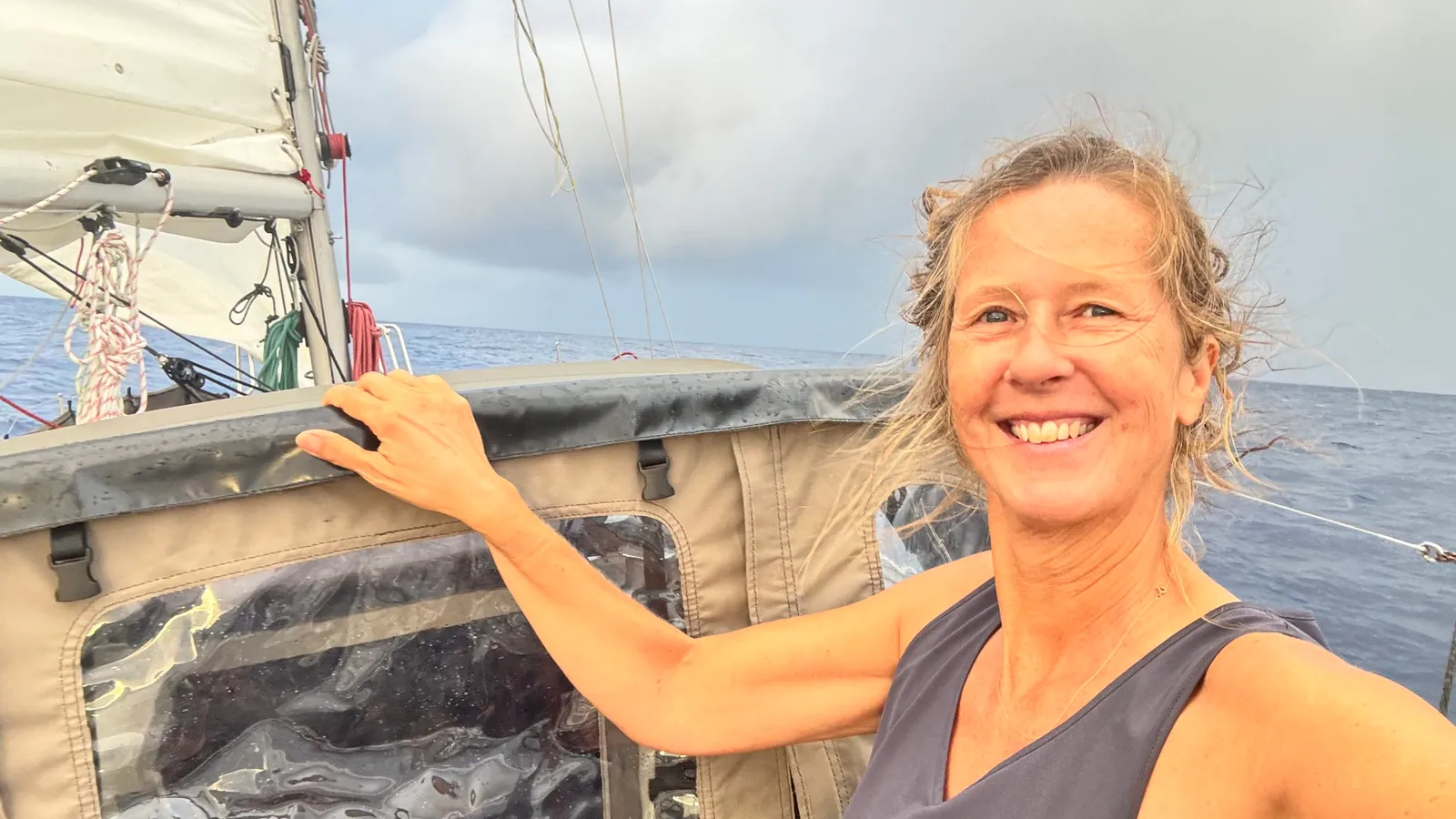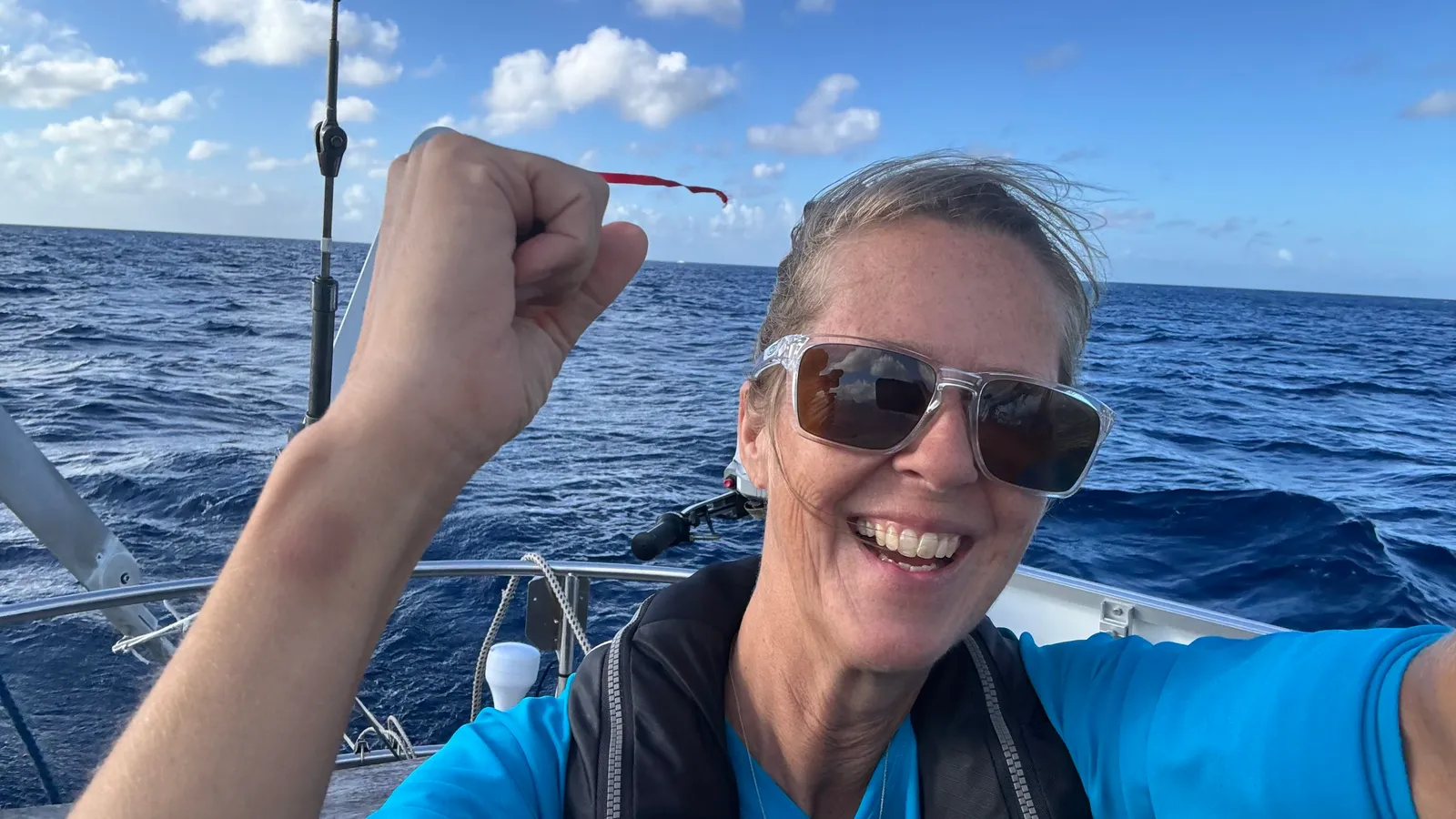
It started with OpenCPN in 2022. I did a course for OpenCPN and could find my way in the software pretty well. Mark and I sailed to Cherbourg and from there aimed to visit the Channel Islands, Alderney Guernsey and Jersey. They are notorious for very big currents, running up to 9 knots. So being well prepared was very important.
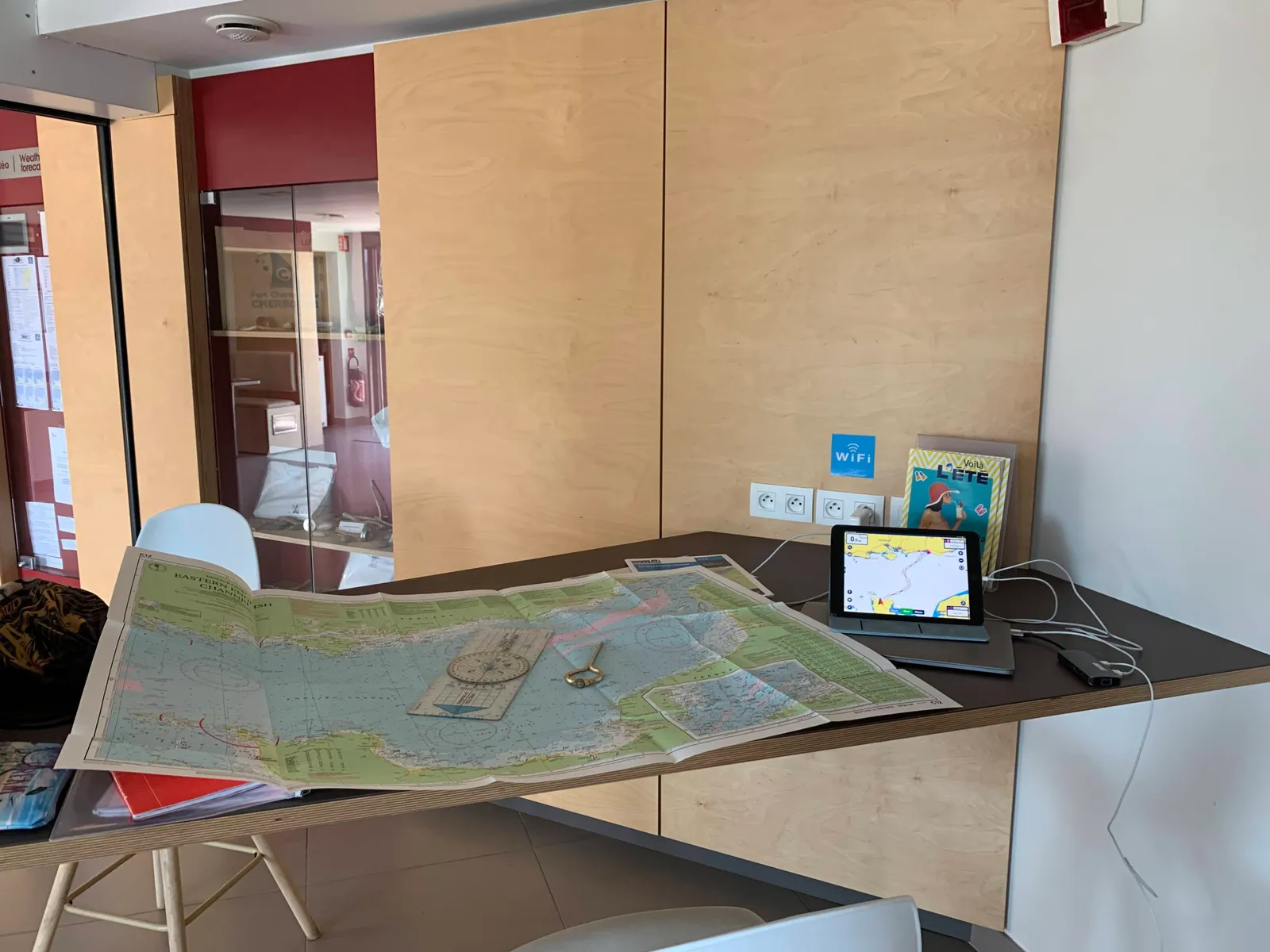
For two long days we were working on the route plan for our trip to the Channel Islands. Paper charts, an iPad and laptop on the table. Looking at chart layers, waypoints, tides and currents. Mark watched. And watched. And then he was done.
“I’ve sorted PredictWind for you,” he said. “So you can get the information you need quickly and easily.” Since you are going to be solo sailing around the world you want your info at your fingertips.
Mark is a software architect by profession. He saw in ten minutes what I hadn’t managed to solve in two days.
OpenCPN runs on a laptop or Android tablet. On a laptop you ideally need a mouse — not easy when the boat is moving. On the Android tablet I could never get it to work properly. With PredictWind I do everything from my phone or iPad. In a few minutes I have all the information I need to plan for a safe trip.
By now I’ve been sailing solo around the world for three years, using PredictWind every day. It has become part of my routine, part of the way I think at sea. A navigation partner.
What is PredictWind?
PredictWind is a weather system that brings together multiple weather models — including their own PWE and PWG models, alongside ECMWF and GFS — and translates them into the practical reality of sailing.
At its core, the advise is to work with the model that is most suited for your region. The other important thing is dat some models are very good for coastal sailing and others better at longterm travels across oceans.
I generally use ECMWF, because it’s known as one of the most consistent models for the medium term. What I find useful is that ECMWF also lets you look further ahead — up to about 30 days. Not a concrete day-by-day forecast, but a picture of trends: how systems might develop and how conditions could differ from what’s normal for that time of year.
I always look at multiple models side by side. When they agree, you know the weather picture is stable. When they diverge, uncertainty increases — and you know you need to be more cautious in your decisions. I don’t use it to make decisions, but to get a sense of what might be coming. If I see the same pattern across several weeks, I factor that into my planning. At the same time, you know that uncertainty grows quickly the further ahead you look. What happens in three weeks isn’t a forecast — it’s a probability.
PredictWind Standard or Professional — what’s the difference?
PredictWind Standard is a solid foundation and works well for coastal sailing. You have access to multiple weather models, routing, departure planning and daily weather briefings. It remains usable offshore too.
Professional is built for longer passages. The difference lies in the depth of the data. It adds high-resolution weather data — down to 1 km — making local effects more visible. You also get detailed information on ocean currents and tidal streams, which directly affect speed and route choices.
What makes the biggest difference for me is the wave analysis. You don’t just see what the wind is doing — you see what the sea is doing to your boat: roll, vertical acceleration and slamming. That makes it visible how a passage will actually feel, and what it will ask of you.
Something else I use a lot: PredictWind shows vessels up to around 300 nautical miles away. I usually focus on boats within 100 miles of me. That gives me some peace of mind when I go to sleep. At the same time I know AIS isn’t complete — there are always vessels without AIS or with it switched off. So I never sleep too long.
Short version: Standard helps you with the basics. Professional helps you in more detail and visualises how the sail will be.
The DataHub — where it all comes together
The DataHub also plays an important role. Based on the data fed back to PredictWind through the DataHub, you get an increasingly refined boat polar. Routing then matches more and more closely how your boat actually behaves in real conditions. Versus the standard boat polar that aimed at maximising all sails in theoretical circumstances.
Every hour the DataHub automatically sends my position and sends and retrieves my email. That way people at home know where I am and how things are going, even when I’ve been at sea for weeks with no land or other boats nearby. I will send a daily message that can be viewed on my tracking page: https://forecast.predictwind.com/tracking/display/Loveworkx/
For me it feels like everything comes together: what I see, what I experience, and what the data shows.
GRIB files — finding the weather window
Before I leave, I look carefully for a good departure window. I study multiple models, compare the coming days, and sometimes deliberately wait a couple of days or more — until the weather picture is stable enough to go. Next to what I see my local weather router in the Netherlands, Tim Lemeer, also explains into details what we are looking at.
During the passage I download fresh GRIB files twice a day via the Iridium GO! Exec. That’s the latest generation satellite connection, around 40 times faster than the old version. In no time I have the information I need, even in the middle of the ocean.
PredictWind optimises the data usage and lets you select exactly which area, which model and which timeframe you want. No unnecessary data. Exactly what you need, wherever you are.
The three tables in PredictWind Professional that I use constantly
This is where PredictWind Professional makes a real difference for me. Built into the route planning are three parameters from naval dynamics. They say nothing about speed. They say everything about comfort, fatigue and structural load. For me, sailing solo on an 8-metre boat, these are the numbers that matter.
Roll (°) — the boat’s lateral motion
Roll is the angle through which your boat moves from port to starboard, driven by the direction of waves relative to your course.
Up to 10° is comfortable. Between 10° and 20° it becomes tiring. Above 20° it’s hard going.
What I’ve learned: roll is often highest when waves come from the side. Sometimes 5 to 10 degrees of course change is enough to reduce it dramatically. That’s not a detour. That’s managing your energy.
Vertacc (g) — vertical acceleration
This is the up-and-down motion of the boat, expressed as fractions of gravity.
Below 0.1 g you barely notice it. Above that, I’d rather not go forward to change a sail or put in a reef. That’s why I want this information as early as possible.
Between 0.2 and 0.3 g it becomes fatiguing. Above that it puts a real load on your body — back, knees, concentration.
This is for me the parameter that determines whether a passage is manageable. Not the wind. Not the wave height. The acceleration. On an 8-metre boat everything responds faster. My margins are lower.
Slam Incidence (%) — the probability of slamming
Slamming is when the hull hits a wave hard. The parameter gives the probability that this happens on a structural basis.
Up to 5% it’s occasional. Above 10% it becomes a risk.
Slamming often happens when you’re sailing upwind, especially in short steep waves. These can be serious impacts — not just audible, but felt through the entire boat.
How I use these three
When I compare routes, I don’t just look at the route and time taken, wind speed and gusts. I also look at the percentage of time reaching, downwind, <4% degrees roll, 0.2 Vertical Acc and <50% Slaminc.
The three parameters each tell a different part of the story: roll is lateral, vertacc is up and down, slam is peak load. Together they describe how a passage feels — from the inside.
Wind determines your course. But these three determine your endurance.
What I’ve learned in three years
PredictWind gives you information. But sailing remains interpretation.
You learn the models the way you learn an instrument. You make your miles. You feel when they’re right. And when it’s better to wait.
Mark found me the tool. PredictWind sponsored my professional package. My experience taught me how to use it.
And somewhere out on the water, thousands of miles later, I still sometimes think about those two days in Cherbourg. About how much I still didn’t know. And how good it was that Mark stepped in.
You can follow me on my PredictWind Tracking Page.
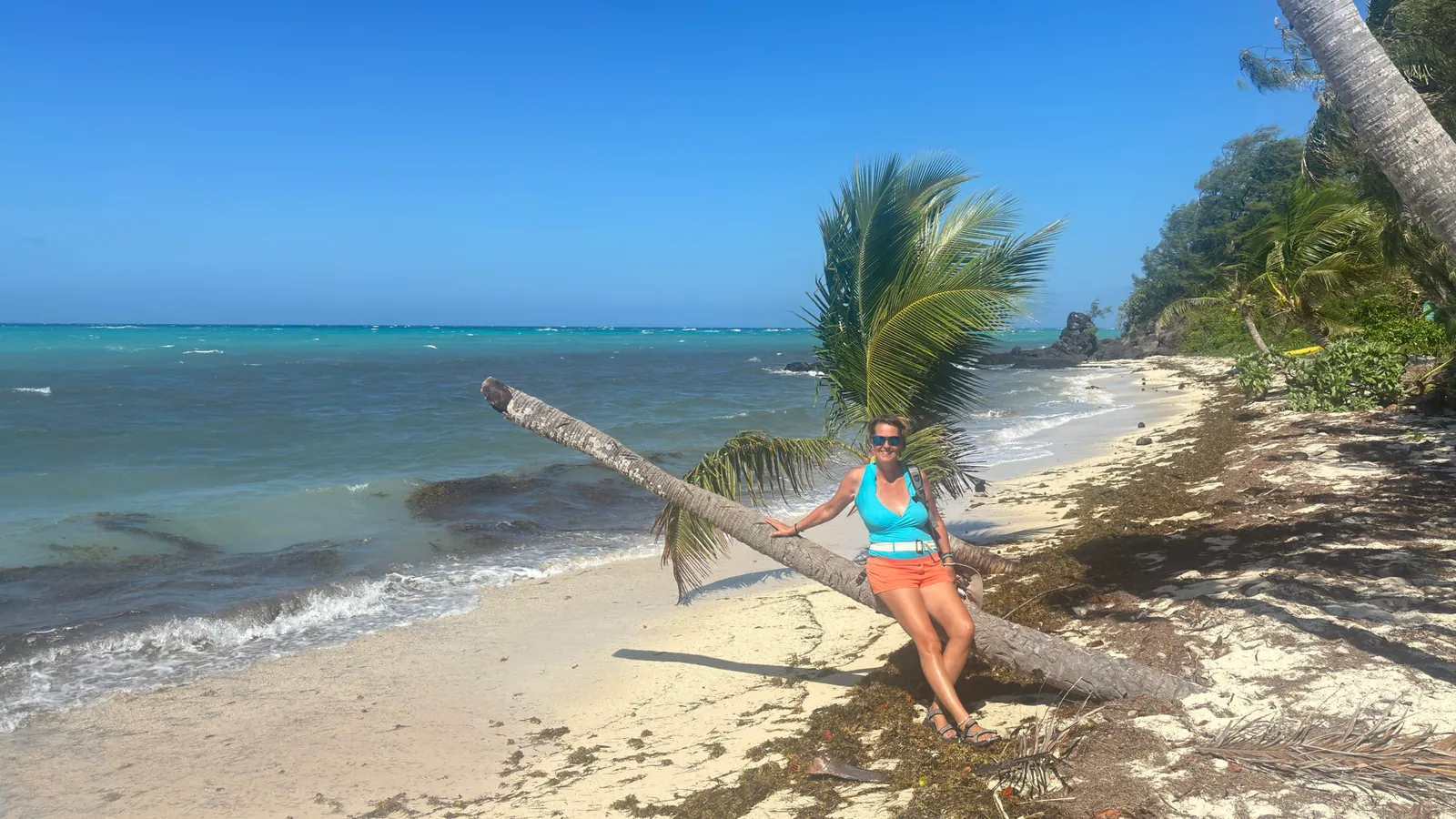
My name is Jacqueline Evers from The Netherlands. Solo sailing around the world in my 27 foot sloop. While my husband and son may have chosen a different path, their unwavering support fuels my solo pursuit of this lifelong dream.
Not confined by age or the constraints of conventional life, in my 50s, I bravely departed from the rat race, trading it for the serenity of the open sea. Through my unscripted videos and blogs, I offer a glimpse into the authentic tapestry of my sailing
🔗 Explore my Adventures: YouTube, Polarsteps & Instagram
📸 Feel connected to my journey: Buy a t-shirt or sweater in the Loveworkx Shop
🌟 Support the Voyage: Join on Patreon or contribute via PayPal
Please Subscribe and Join me as I sail Around the World… 🌍